A guide by Vitor Araujo
AI in hiring
The 10 questions people ask most about AI in hiring.
 Vitor Araujo · · 9 min read
Written with AI from my positions and the sources cited in each answer.
What you will read
These are the questions about AI in hiring that come up most on Google and in AI chats. Each answer starts short, shows what the research says, and ends with what I think.
- How is AI used in hiring?
- Is AI biased in hiring?
- What is Mobley v. Workday?
- Can candidates trick AI resume screening?
- Does AI prefer resumes written by AI?
- Do cover letters still matter?
- Do AI job interviews work?
- What does the law say about AI in hiring?
- What is algorithmic monoculture in hiring?
- How do you use AI in HR without discriminating?
01
How is AI used in hiring?
AI is used in hiring to target job ads, find candidates, match résumés to vacancies, and support interviews. These systems can also automate rejections and repeat biases from past hiring decisions.
The criteria AI uses matter because they can affect who reaches an interview and who gets rejected. Besides repeating an employer’s past choices, screening tools can be fooled by keywords hidden in résumés.
- A UK government guide describes AI use in targeted ads, chatbots, résumé matching, tests, and recorded interviews, and warns of discrimination and digital exclusion.Responsible AI in Recruitment · UK Department for Science, Innovation and Technology, GOV.UK, 2024
- An Upturn report says hiring tools often automate rejections and that, without active measures, they can reproduce bias by copying past hiring decisions.Help Wanted: An Examination of Hiring Algorithms, Equity, and Bias · Aaron Rieke, Miranda Bogen, Upturn, 2018
- A study found hidden text intended to fool AI in 1 in 100 real résumés, with 9 in 10 of those cases containing hidden data, such as keywords, skills, and experience, rather than instructions to the system.Measuring Real-World Prompt Injection Attacks in LLM-based Resume Screening · M. Zhang et al., USENIX Security 2026, 2026
What I think: I recommend testing whether AI identifies suitability for the job, rather than just words in a résumé, before expanding its use in hiring.
02
Is AI biased in hiring?
AI can be biased in hiring, favoring even the résumé shown first and repeating patterns from past hiring decisions. Using different models does not guarantee fairer decisions either: they can exclude the same candidates.
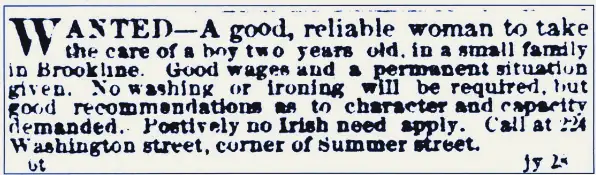
Predictive tools can take part throughout hiring, from finding candidates to selection, often automating rejections. That makes it important to check not only whom AI selects, but also whom it leaves out.
- A study comparing equally qualified résumés across 70 occupations found that 21 of 22 models preferred the résumé shown first.Gender and positional biases in LLM-based hiring decisions: evidence from comparative CV/résumé evaluations · David Rozado, PeerJ Computer Science 12:e3628, 2026
- In a study using GPT-4, a résumé with an additional disability-related award, scholarship and position ranked first in only 15 of 60 comparisons with the version without those additions.Identifying and Improving Disability Bias in GPT-Based Resume Screening · Kate Glazko et al., FAccT 2024, 2024
- A study covering 10 open model families and 76 occupations found rejection by at least 9 of 10 models for 20.1% of candidates over 40, compared with 14.5% of those under 40.Monocultural Biases: Correlated biases in large language models lead to unequal systemic exclusion rates in hiring · Matthew Bone, Fabian Stephany, Maria del Rio-Chanona, COLM 2026, 2026
- An Upturn report concludes that without active measures, hiring tools tend to develop bias, for example by replicating an employer's past hiring decisions.Help Wanted: An Examination of Hiring Algorithms, Equity, and Bias · Aaron Rieke, Miranda Bogen, Upturn, 2018
What I think: I recommend that, as companies expand AI use in hiring, they measure who is being excluded and check whether different models repeat the same mistakes before automating more rejections.
03
What is Mobley v. Workday?
Mobley v. Workday is a lawsuit filed in California in 2023 challenging alleged discrimination in AI-based applicant screening. The case addresses whether Workday, the screening system provider, can be held liable as an agent of the employers using it.
The case matters because responsibility for hiring decisions can extend to the technology provider, not just the employer offering the job. In 2024, the judge accepted that possibility; in 2025, an age-discrimination collective action was conditionally certified. In 2026, the California-law claims continue, and Workday’s bias testing was held protected by attorney-client privilege.
- The plaintiff alleges rejection from more than 100 jobs using the same screening vendor, often immediately or in the middle of the night.Mobley v. Workday, Inc. · N.D. Cal., no. 3:23-cv-00770, N.D. California, 2023
- A study of 4.2 million applications across 156 firms found that 4% of people applying to ten jobs were recommended for rejection from all ten, a pattern more frequent than chance would explain.Algorithmic Monocultures in Hiring · Rishi Bommasani et al., FAccT 2026, 2026
What I think: I would treat multiple employers using the same screening tool as a risk of repeated exclusion and demand evaluations before expanding its use.
04
Can candidates trick AI resume screening?
Candidates can influence AI resume screening without changing their qualifications: in tests, rewriting the same resume was enough to change decisions. This shows that screening can respond to how a resume is written, not just to competence.
The problem goes beyond giving AI hidden instructions: one study found hidden keywords and experience in real resumes, while another found an advantage for text written by the same model used to evaluate it.
- A study found hidden text intended to fool AI in 1 in 100 real resumes; in 9 out of 10 of those cases, it was data such as keywords, skills, and experience, rather than instructions to the AI.Measuring Real-World Prompt Injection Attacks in LLM-based Resume Screening · M. Zhang et al., USENIX Security 2026, 2026
- A study still under review found that 29.6% of Llama 3.1 8B decisions and 41.4% of Mistral 7B decisions flipped when resumes were rewritten without changing competence.Competence-Preserving Resume Perturbations Expose Presentation Sensitivity in LLM Screening · Q. Chen, Y. Xiao, arXiv, em revisão, 2026
- In a study’s simulated selection, candidates who used the same AI model as the evaluator to write their resume summary had a 23% to 60% better chance of making the shortlist.AI Self-preferencing in Algorithmic Hiring: Empirical Evidence and Insights · Jiannan Xu, Gujie Li, Jane Yi Jiang, arXiv; resumo estendido na AIES 2025, 2025
What I think: I would only expand AI screening after testing whether rewriting the same resume changes the decision, without treating good writing as proof of competence.
05
Does AI prefer resumes written by AI?
In a simulated hiring process, large AI models favored resumes with summaries written by the evaluating model itself. That does not mean every AI prefers every AI-written resume.
The issue is not just who wrote the resume: changing the wording without changing the competence presented can also change an AI's decision. An advantage in screening may therefore reflect writing style rather than a difference in qualifications.
- A preliminary study involving 2,245 resumes found that, in simulated screening across 24 occupations, applicants whose summaries were written by the evaluating model had a 23% to 60% better chance of making the shortlist, with text quality controlled.AI Self-preferencing in Algorithmic Hiring: Empirical Evidence and Insights · Jiannan Xu, Gujie Li, Jane Yi Jiang, arXiv; resumo estendido na AIES 2025, 2025
- Another preliminary study found that 29.6% of decisions by Llama 3.1 8B and 41.4% of decisions by Mistral 7B flipped when resumes were rewritten without changing the competence presented.Competence-Preserving Resume Perturbations Expose Presentation Sensitivity in LLM Screening · Q. Chen, Y. Xiao, arXiv, em revisão, 2026
What I think: I would test whether rewriting the same resume changes the selection before expanding the use of AI in hiring.
06
Do cover letters still matter?
Cover letters can still help secure a conversation, but with AI, polished and tailored writing says less about an applicant’s ability. That advantage can disappear as AI use becomes widespread.
AI tools let applicants produce much more tailored letters. This makes polished writing less useful for distinguishing candidates: a better letter does not necessarily mean someone is better prepared for the job.
- A preliminary study found a 79% decline in the link between tailored letters and job offers after an AI tool was introduced; the advantage in getting callbacks disappeared in about two months as use became widespread.Signaling in the Age of AI: Evidence from Cover Letters · J. Cui, G. Dias, J. Ye, arXiv, 2025
- In a study of proposals on a freelance platform, researchers simulated the loss of polished writing as a signal of ability and estimated 19% fewer hires among the most skilled 20% and 14% more among the least skilled 20%, results that were simulated, not observed.Making Talk Cheap: Generative AI and Labor Market Signaling · Anaïs Galdin, Jesse Silbert, arXiv, job market paper, 2025
What I think: I would treat the letter as an introduction, not proof of ability, and assess what the person can actually do as AI makes polished writing more common.
07
Do AI job interviews work?
In a study of customer-service applicants in the Philippines, voice AI interviews produced better candidate selection than human interviews, but people still made all hiring decisions.
The question matters because AI already plays a role across recruitment, according to a UK government guide, which also warns about discrimination and digital exclusion. Having AI conduct an interview and letting AI decide whom to hire are different uses.
- A study randomly assigned 67,000 applicants to human or voice AI interviews, found better selection with AI, and reported that 78% chose AI when given the option, while humans made all decisions.Voice AI in Firms: A Natural Field Experiment on Automated Job Interviews · Brian Jabarian, Luca Henkel, CESifo Working Paper 12984; SSRN 5395709, 2025
- A UK government guide describes AI use from job advertising through interviews and warns that it can perpetuate biases and cause digital exclusion.Responsible AI in Recruitment · UK Department for Science, Innovation and Technology, GOV.UK, 2024
- A Pew Research Center survey found that 66% of Americans would not want to apply to an employer using AI to help make hiring decisions, although 47% believed it would evaluate applicants more equally than humans.AI in Hiring and Evaluating Workers: What Americans Think · Lee Rainie et al., Pew Research Center, 2023
What I think: I would expand AI interviewing only after measuring selection quality and the risks of exclusion, while keeping people responsible for decisions.
08
What does the law say about AI in hiring?
In Brazil, the LGPD gives people the right to request a review of hiring decisions made solely through automated processing of personal data and to receive information about the criteria used, subject to trade secrets. That right does not require the review to be carried out by a person.
Existing law, proposed legislation and rules with future application dates need to be distinguished. As of November 10, 2026, Brazil’s AI bill was still awaiting a report in the Chamber of Deputies; in the European Union, rules for high-risk AI in employment are scheduled to apply in December 2027.
- Article 20 of Brazil’s LGPD allows people to request a review of solely automated decisions affecting their interests and clear information about the criteria, subject to trade secrets, but does not require human review.Lei nº 13.709, de 14 de agosto de 2018 (Lei Geral de Proteção de Dados Pessoais), art. 20 · Brasil, Planalto, texto compilado, 2018
- As of November 10, 2026, the Chamber of Deputies listed PL 2338/2023 as awaiting its rapporteur’s report in the Special Committee on Artificial Intelligence and still subject to a vote of the full Chamber.PL 2338/2023, ficha de tramitação · Câmara dos Deputados, Câmara dos Deputados, 2026
- The European Commission classifies AI used in employment, such as CV-sorting software, as high-risk and says the rules for these uses apply from December 2, 2027.AI Act · European Commission, European Commission, Shaping Europe's digital future, 2026
- In New York City, Local Law 144 requires covered automated employment decision tools to have a bias audit within the past year, a published summary of results, and notice to candidates and employees 10 business days before use.Automated Employment Decision Tools (AEDT) · NYC Department of Consumer and Worker Protection, NYC.gov, 2023
What I think: I would not wait for new rules to measure errors and discrimination, explain the criteria, and ensure a person can intervene in AI-assisted hiring.
09
What is algorithmic monoculture in hiring?
Algorithmic monoculture in hiring occurs when multiple companies use shared algorithms, which can lead to the same people being rejected across many jobs. A tool that is more accurate in each separate evaluation does not guarantee better decisions overall.

The problem did not start with ChatGPT: a study found this pattern in applications from 2018 to 2022. The issue goes beyond whether one company makes good choices: it also matters whether the same applicant faces the same closed door at several companies.
- A theoretical model by Kleinberg and Raghavan shows that overall decision quality can fall when multiple firms use the same algorithm, even if it is more accurate than each separate evaluation.Algorithmic monoculture and social welfare · Jon Kleinberg, Manish Raghavan, PNAS 118(22), 2021
- A study of 4.2 million real applications found that 4% of people who applied to 10 jobs were recommended for rejection from all of them, more than chance would explain.Algorithmic Monocultures in Hiring · Rishi Bommasani et al., FAccT 2026, 2026
- A simulation by Hedden and Raghavan produced the best result when every firm used the average of several independent evaluations, but the authors question whether this is feasible in practice.Algorithmic Monoculture and Its Critics · Brian Hedden, Manish Raghavan, Philosophical Perspectives, 2026
What I think: I would measure not only hiring tools’ accuracy but also how much they repeat the same rejections across companies before expanding their use.
10
How do you use AI in HR without discriminating?
Human review alone does not guarantee discrimination-free HR decisions: a study found that people followed biased AI recommendations even when they rated the tool poorly.
A UK government guide describes AI use from job advertising through interviews and warns about discrimination and digital exclusion. In New York City, the city government says automated employment decision tools are subject to requirements for bias audits, publication of results and advance notice.
- The UK government guide warns that AI in recruitment can perpetuate bias, digitally exclude people and target job advertisements in discriminatory ways.Responsible AI in Recruitment · UK Department for Science, Innovation and Technology, GOV.UK, 2024
- According to New York City's government, Local Law 144 requires a bias audit within the past year, publication of a results summary and 10 business days' advance notice for tools covered by the law.Automated Employment Decision Tools (AEDT) · NYC Department of Consumer and Worker Protection, NYC.gov, 2023
- In a study involving 528 people choosing candidates for 16 jobs, participants followed biased AI recommendations even when they rated the tool poorly.No Thoughts Just AI: Biased LLM Hiring Recommendations Alter Human Decision Making and Limit Human Autonomy · Kyra Wilson et al., AIES 2025, 2025
- In a GPT-4 resume-screening study, the resume with additional disability-related credentials ranked first in only 15 of 60 comparisons.Identifying and Improving Disability Bias in GPT-Based Resume Screening · Kate Glazko et al., FAccT 2024, 2024
What I think: I would expand AI use in HR only after measuring its biases, making the results transparent and checking whether human review actually challenges discriminatory recommendations.
Who writes this
I’m Vitor Araujo, an engineer. I build AI products for companies, and I speak and write about AI ethics and the philosophy of technology. More about me.
Other guides