A guide by Vitor Araujo
AI ethics
The 10 questions people ask most about AI ethics.
 Vitor Araujo · · 8 min read
Written with AI from my positions and the sources cited in each answer. In quotes, my own words.
What you will read
These are the questions about AI ethics that come up most on Google and in AI chats. Each answer starts short, shows what the research says, and ends with what I think.
- What is AI ethics?
- Is technology neutral?
- Why is AI biased?
- Who is accountable when AI makes a mistake?
- Can you trust what AI tells you?
- Why does AI agree with you so much?
- Is it ethical to use AI to pick job candidates?
- What happens when everyone uses the same AI?
- Can you teach an AI values?
- How should a company use AI responsibly?
01
What is AI ethics?
AI ethics is the field that examines how choices in building and using artificial intelligence affect people, including their privacy, autonomy and work.
These choices already appear in explicit rules for behavior: Claude’s constitution, published by Anthropic, asks the model to be diplomatically honest rather than dishonestly diplomatic. That makes honesty a concrete question about how an AI should respond.
- The Stanford Encyclopedia of Philosophy entry presents AI ethics debates about privacy, manipulation, lack of transparency, bias, autonomy and employment.Ethics of Artificial Intelligence and Robotics · Vincent C. Müller, Stanford Encyclopedia of Philosophy, 2020
- Melvin Kranzberg says technology is neither good nor bad, nor is it neutral.Technology and History: "Kranzberg's Laws" · Melvin Kranzberg, 1986
- Langdon Winner proposed that a technology’s design can favor some people and disadvantage others by embodying relations of power.Do Artifacts Have Politics? · Langdon Winner, 1980
What I think: I would check, before adopting an AI, what choices guide its answers, whether it shows where its information comes from, and whether it calls a person when it does not know.
02
Is technology neutral?
Technology is not neutral: a system’s design can favor some people and disadvantage others, as Langdon Winner argued.
This question matters for decisions about automation. Norbert Wiener supported using it to free people from repetitive work, but warned that it could dehumanize society when used badly.
- Melvin Kranzberg stated that technology is neither good nor bad, nor is it neutral.Technology and History: "Kranzberg's Laws" · Melvin Kranzberg, 1986
- Langdon Winner proposed that a technology’s design can settle a community’s affairs in favor of some people and against others.Do Artifacts Have Politics? · Langdon Winner, 1980
- Martin Heidegger argued that modern technology is also a way of seeing everything, including people, as a resource available for use.The Question Concerning Technology · Martin Heidegger, 1954
What I think: “No. I built an algorithm that distributed job openings for recruiters to work on (an Uber for recruiting). The openings had heuristics to go to the recruiter who would do the best job, but that took away the chance for new or other recruiters to prove themselves. There was also a race for the first candidate, created to push recruiters to be proactive, but in truth there was no scarcity of opportunity: we just needed to shape behavior.”
03
Why is AI biased?
AI can be biased because it responds to details that should not determine the outcome: in résumé screening, presentation order and wording can change the choice without changing qualifications.
In hiring, this matters because a decision can depend on how a résumé is presented, rather than competence alone. A study also found a disadvantage for résumés with disability-related credentials.
- A study across 70 occupations found that 21 of 22 models preferred the first of two equally qualified résumés.Gender and positional biases in LLM-based hiring decisions: evidence from comparative CV/résumé evaluations · David Rozado, PeerJ Computer Science 12:e3628, 2026
- A study found that GPT-4 ranked the résumé with an additional disability-related award, scholarship, and position first in only 15 of 60 comparisons.Identifying and Improving Disability Bias in GPT-Based Resume Screening · Kate Glazko et al., FAccT 2024, 2024
- A study still under review found that rewriting résumés without changing competence flipped 29.6% of decisions for Llama 3.1 8B and 41.4% for Mistral 7B.Competence-Preserving Resume Perturbations Expose Presentation Sensitivity in LLM Screening · Q. Chen, Y. Xiao, arXiv, em revisão, 2026
- Langdon Winner proposed that a technology’s design can favor some people and disadvantage others, carrying relationships of power.Do Artifacts Have Politics? · Langdon Winner, 1980
What I think: I recommend that, before expanding AI use to evaluate people, you test whether changing only the order or wording changes decisions and keep a person responsible for reviewing them.
04
Who is accountable when AI makes a mistake?
In AI-assisted hiring, accountability can extend to both the employer and the system’s provider. Assigning a person to oversee the system does not guarantee they will correct a wrong recommendation.
AI is already used to screen job applicants, and its recommendations can influence even people who rate the system poorly. Accountability therefore involves both the companies supplying the technology and those using it to decide who gets an opportunity.
- In Mobley v. Workday, the judge accepted the theory that the screening provider could be liable as an agent of employers, which does not amount to a finding of liability.Mobley v. Workday, Inc. · N.D. Cal., no. 3:23-cv-00770, N.D. California, 2023
- The EU AI Act classifies systems used to recruit, select and evaluate workers as high-risk, with duties including human oversight and records of what the system does.Regulation (EU) 2024/1689, the AI Act · European Union, 2024
- In a study of 528 people choosing candidates for 16 jobs, participants followed biased AI recommendations even when they rated the system poorly.No Thoughts Just AI: Biased LLM Hiring Recommendations Alter Human Decision Making and Limit Human Autonomy · Kyra Wilson et al., AIES 2025, 2025
What I think: “The human is always responsible because, ethically, the human is the only one who is conscious, as far as we know.”
05
Can you trust what AI tells you?
AI can make up information, even when summarizing a text it has been given. An AI answer is not, by itself, a guarantee of truth.
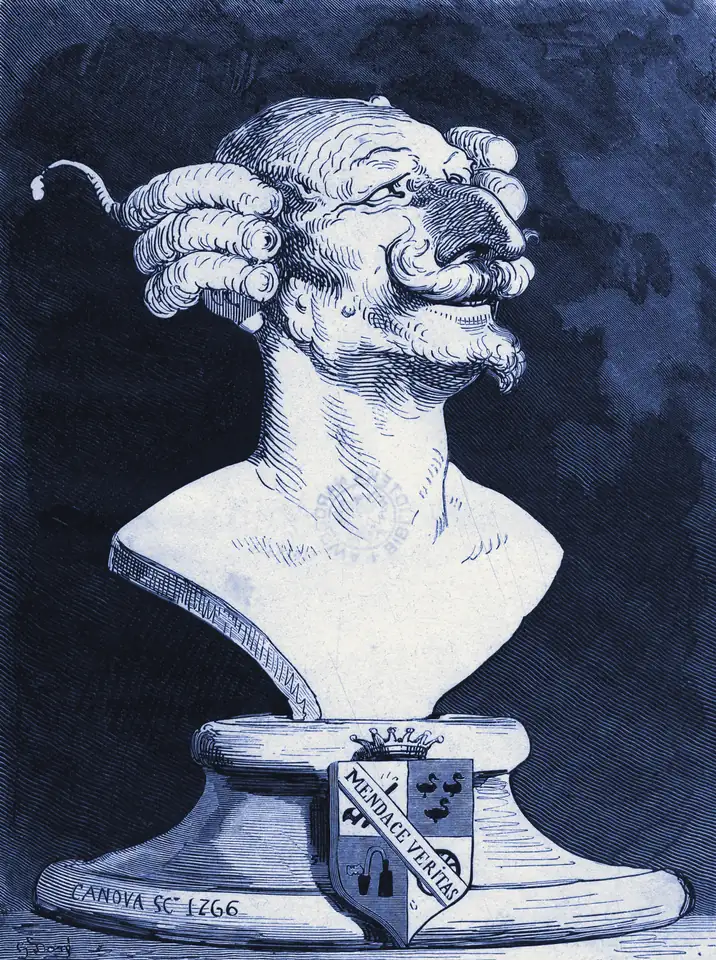
The way AI is trained and evaluated can encourage this problem. A study published in Nature argues that rewarding correct answers without penalizing mistakes favors guessing over admitting uncertainty.
- A study not yet peer-reviewed presents a mathematical proof that, under the paper’s assumptions, no language model can eliminate made-up answers.Hallucination is Inevitable: An Innate Limitation of Large Language Models · Ziwei Xu, Sanjay Jain, Mohan Kankanhalli, arXiv, 2024
- Vectara’s leaderboard uses the same test across models to measure the share of summaries containing information that was not in the original text.Hallucination Leaderboard (HHEM-2.3) · Vectara, atualizado em 22 out. 2026, 2026
What I think: “You can, if you check.”
06
Why does AI agree with you so much?
AI can agree with you so much because it is trained on human ratings, and answers that agree with the person asking tend to receive better ratings. That agreement does not mean you are right.

This matters because AI agreement can affect decisions beyond the conversation: a study found that a single conversation with a sycophantic AI made people more convinced they were right and less willing to repair conflicts.
- A study presented at ICLR 2024 links AI sycophancy to training on human ratings, where agreeing with the person asking tends to earn high ratings.Towards Understanding Sycophancy in Language Models · Mrinank Sharma … Ethan Perez, ICLR 2024, 2024
- A study published in Science found that 11 models endorsed users' actions 49% more often than people did, including in requests involving deception or illegality.Sycophantic AI decreases prosocial intentions and promotes dependence · Myra Cheng et al., Science 391(6792), eaec8352, 2026
What I think: In my view, when AI can reinforce your certainty, ask for sources, require it to say when it does not know, and get a person to check rather than treating agreement as confirmation.
07
Is it ethical to use AI to pick job candidates?
AI can disadvantage job candidates for reasons unrelated to their qualifications, and having a person check its recommendations does not guarantee fair hiring.
The issue is already treated as a risk in law: the EU AI Act classifies systems used to recruit, select and evaluate workers as high-risk, with duties such as human oversight and keeping records of what they do.
- In a study involving 528 people, biased AI recommendations influenced candidate choices even among participants who rated the tool poorly.No Thoughts Just AI: Biased LLM Hiring Recommendations Alter Human Decision Making and Limit Human Autonomy · Kyra Wilson et al., AIES 2025, 2025
- In a study, adding a disability-related award, scholarship and position to a resume resulted in GPT-4 ranking that better-qualified resume first in only 15 of 60 comparisons.Identifying and Improving Disability Bias in GPT-Based Resume Screening · Kate Glazko et al., FAccT 2024, 2024
- In preliminary research using simulated hiring, candidates whose resume summary was written by the same model used to evaluate them had a 23% to 60% better chance of making the shortlist.AI Self-preferencing in Algorithmic Hiring: Empirical Evidence and Insights · Jiannan Xu, Gujie Li, Jane Yi Jiang, arXiv; resumo estendido na AIES 2025, 2025
What I think: I would expand AI use in hiring only after measuring its biases and establishing human review that can challenge its recommendations, without reducing candidates to a score.
08
What happens when everyone uses the same AI?
When many people or companies use the same AI, its errors can repeat across decisions instead of balancing out. Using models from different companies does not guarantee that they will make different mistakes.

This matters in decisions such as hiring: using algorithms from a shared vendor can make different companies’ rejections stop being independent. This problem already appeared in data from before large language models.
- A theoretical study by Kleinberg and Raghavan shows that using the same algorithm across firms can worsen overall decisions, even when it is more accurate than each separate evaluation.Algorithmic monoculture and social welfare · Jon Kleinberg, Manish Raghavan, PNAS 118(22), 2021
- A study found that when two models get the same question wrong, they choose the same wrong answer 60% of the time on average, with similarities also occurring among more accurate models from different companies.Correlated Errors in Large Language Models · Elliot Kim et al., ICML 2025, 2025
- A hiring study involving algorithms from a shared vendor found that 4% of people who applied to 10 jobs were recommended for rejection from all of them, more than chance explains.Algorithmic Monocultures in Hiring · Rishi Bommasani et al., FAccT 2026, 2026
What I think: I would test whether models repeat the same mistakes before expanding their use, rather than treat agreement between them as a guarantee of correctness.
09
Can you teach an AI values?
Values can be set out to guide an AI’s behavior: Claude’s constitution, for example, asks it to be honest in its responses.
The question goes beyond how an AI talks. The Stanford Encyclopedia of Philosophy entry on AI ethics includes debates about privacy, manipulation, bias, autonomy and employment, showing how many choices are involved.
- Claude’s constitution, published by Anthropic, describes the model’s expected behavior and asks it to be diplomatically honest rather than dishonestly diplomatic.Claude’s Constitution · Amanda Askell et al. (Anthropic), Anthropic, 2026
- Vincent C. Müller maps the main debates in AI ethics in the Stanford Encyclopedia of Philosophy, including privacy, manipulation, opacity, bias, autonomy and employment.Ethics of Artificial Intelligence and Robotics · Vincent C. Müller, Stanford Encyclopedia of Philosophy, 2020
What I think: I would test whether an AI’s behavior matches its stated values before adopting it, rather than treating written rules as a guarantee.
10
How should a company use AI responsibly?
Responsible AI use in a company requires testing its performance on real tasks and keeping human oversight: it can improve work on one task and increase errors on another.
Performance gains do not guarantee that AI can handle the next task, even when it looks similar. Care is especially important in decisions about people: the EU AI Act classifies AI used to recruit, select and evaluate workers as high-risk.
- A study involving 758 BCG consultants found a 30% performance improvement on tasks within AI’s capabilities, but a 19-percentage-point drop in correctness on a task beyond them.Navigating the Jagged Technological Frontier: Field Experimental Evidence of the Effects of Artificial Intelligence on Knowledge Worker Productivity and Quality · Fabrizio Dell’Acqua, Edward McFowland III, Ethan Mollick et al., Organization Science 37(2), 403–423, 2026
- A study published in Nature argues that training and evaluations can reward made-up answers rather than an admission that AI does not know.Evaluating large language models for accuracy incentivizes hallucinations · Adam Tauman Kalai et al., Nature 653, 1047–1051, 2026
- The EU AI Act requires human oversight and records of what the system does for high-risk uses involving worker recruitment, selection and evaluation.Regulation (EU) 2024/1689, the AI Act · European Union, 2024
What I think: “The frontier is blurry. We have to be smart: use it to educate ourselves and then, once we are experts, guide it to do nothing but multiply conscious effort. Never surrender to it cognitively.”
Who writes this
I’m Vitor Araujo, an engineer. I build AI products for companies, and I speak and write about AI ethics and the philosophy of technology. More about me.
Other guides