A guide by Vitor Araujo
AI and jobs
The 10 questions people ask most about AI and jobs.
 Vitor Araujo · · 9 min read
Written with AI from my positions and the sources cited in each answer. In quotes, my own words.
What you will read
These are the questions about AI and jobs that come up most on Google and in AI chats. Each answer starts short, shows what the research says, and ends with what I think.
- Will AI replace jobs?
- Which jobs will AI replace?
- Will AI replace programmers?
- Will AI replace teachers?
- What can AI not replace?
- Does AI really make people more productive?
- Who wins and who loses with AI at work?
- Is AI killing entry-level jobs?
- Does good writing still count with AI?
- How do you prepare for AI at work?
01
Will AI replace jobs?
AI can replace some work, but it can also help people do their jobs and increase demand for workers. Employment effects vary across groups, and replacing tasks does not necessarily mean eliminating entire jobs.
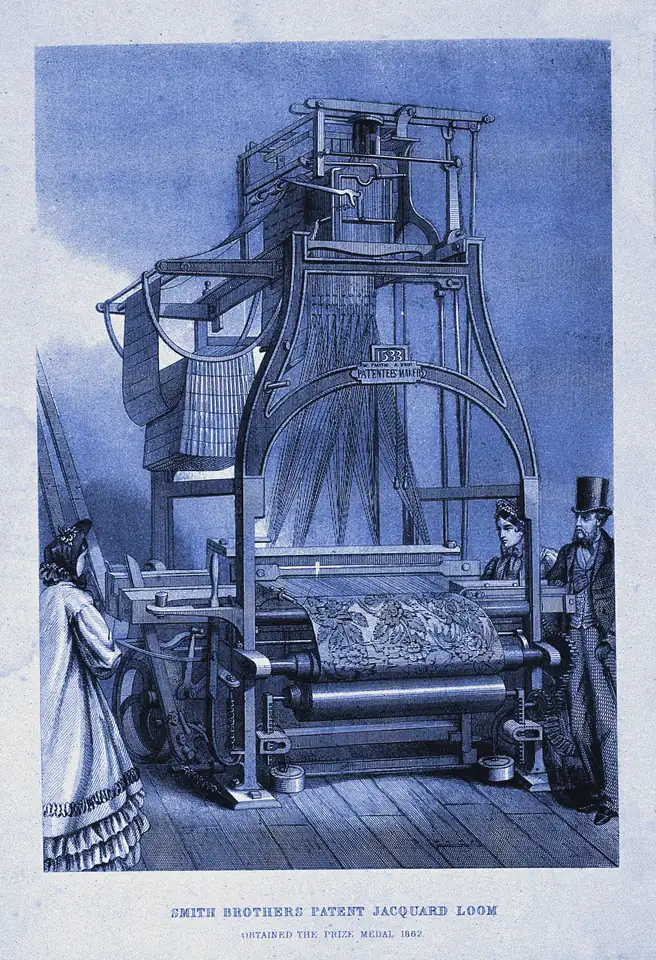
Change is already showing up in how work is organized: a study in Denmark found new AI-related tasks without a detectable effect on earnings or hours worked. Another study found signs of employment losses among young workers in exposed occupations, but did not establish that AI caused them.
- David Autor argues that automation replaces some work but also complements human work and raises the value of problem-solving, adaptability and creativity.Why Are There Still So Many Jobs? The History and Future of Workplace Automation · David H. Autor, Journal of Economic Perspectives 29(3), 3-30, 2015
- An NBER study using Danish records estimated no effect of chatbots on earnings or hours worked, ruling out effects larger than 2% two years after ChatGPT’s launch.Still Waters, Rapid Currents: Early Labor Market Transformation under Generative AI · Anders Humlum, Emilie Vestergaard, NBER Working Paper 33777, 2025
- A Stanford study found no widespread job losses, but employment among workers aged 22 to 25 in AI-exposed occupations was 19% below the comparison scenario, an early signal rather than proof of cause.Canaries in the Coal Mine? Six Facts about the Recent Employment Effects of Artificial Intelligence · Erik Brynjolfsson, Bharat Chandar, Ruyu Chen, Stanford Digital Economy Lab, 2025
What I think: “It will, many of them. But there is also the effect that when something gets cheap, more people buy it, and those jobs change or grow. Both facts are true.”
02
Which jobs will AI replace?
AI is already used to automate writing and software development tasks, but that does not establish that those professions will disappear. Greater exposure to AI can mean getting help as well as having tasks replaced.
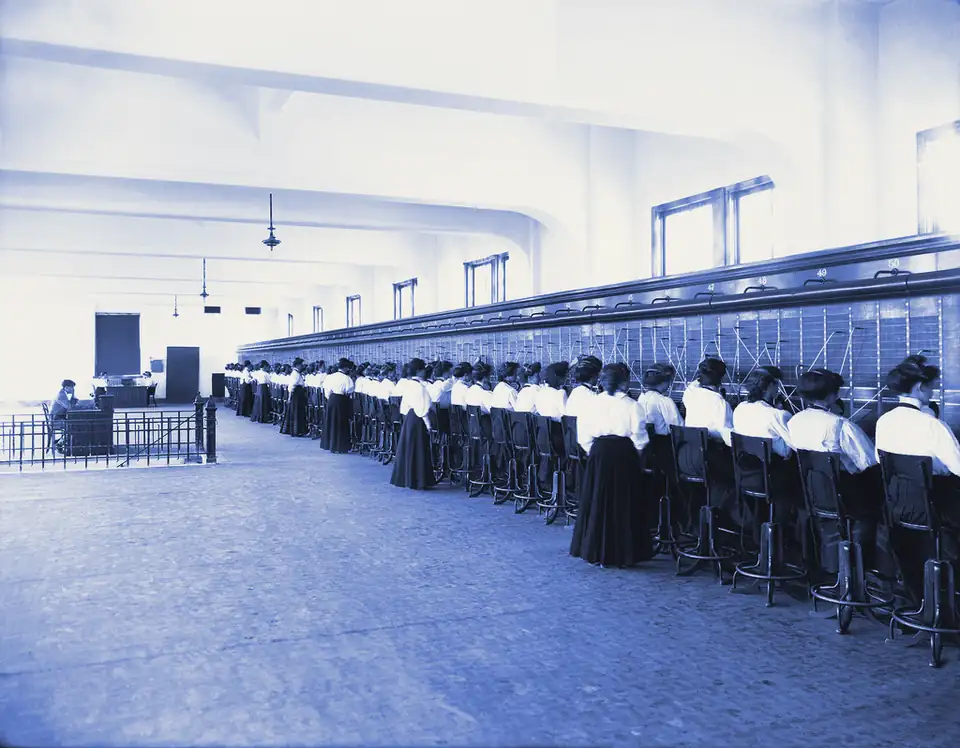
The change also reaches higher-income work and jobs held by college graduates. That makes it important to separate effects on tasks from the elimination of jobs: exposure estimates do not say which professions will disappear or when.
- A preliminary study estimates that language models could affect at least half the tasks of about 19% of US workers, without predicting when this will happen.GPTs are GPTs: An Early Look at the Labor Market Impact Potential of Large Language Models · Tyna Eloundou et al., arXiv, 2023
- A preliminary study of Claude conversations found use concentrated in software and writing, with 57% suggesting help with human work and 43% automation, but the data come from a single platform.Which Economic Tasks are Performed with AI? Evidence from Millions of Claude Conversations · Kunal Handa et al., arXiv, 2025
- A Pew Research Center analysis found greater AI exposure among college graduates and higher earners, stressing that exposure can mean replacement or help, with the effect on employment unclear.Which U.S. Workers Are More Exposed to AI on Their Jobs? · Rakesh Kochhar, Pew Research Center, 2023
What I think: I support measuring AI’s effects before promising replacements and preserving people’s dignity as work changes.
03
Will AI replace programmers?
AI can speed up programming tasks, but it can also slow them down, depending on the context. Those results do not establish that AI will replace programmers.
The debate involves two different things: completing tasks faster and eliminating jobs. In the US, the official employment forecast for software developers, quality assurance analysts and testers still shows growth, partly because of expanding software development for AI.
- In an experimental study published as a preprint, developers with GitHub Copilot built an HTTP server in JavaScript 55.8% faster than those without the tool.The Impact of AI on Developer Productivity: Evidence from GitHub Copilot · Sida Peng et al., arXiv, 2023
- In a study with 16 experienced developers working on familiar projects, AI tools increased completion time by 19%, although participants afterwards believed they had saved time.Measuring the Impact of Early-2025 AI on Experienced Open-Source Developer Productivity · Joel Becker et al., arXiv:2507.09089, 2025
- A study presented as a working paper, combining three experiments with 4,867 developers, found a 26.08% increase in completed tasks with an AI assistant, with larger gains among less experienced developers.The Effects of Generative AI on High-Skilled Work: Evidence from Three Field Experiments with Software Developers · Zheyuan (Kevin) Cui et al., Microsoft Research; SSRN 4945566, 2025
- The US Bureau of Labor Statistics projects 10% employment growth for software developers, quality assurance analysts and testers between 2025 and 2035.Software Developers, Quality Assurance Analysts, and Testers · U.S. Bureau of Labor Statistics, Occupational Outlook Handbook, U.S. Bureau of Labor Statistics, 2026
What I think: I recommend comparing time spent and tasks completed with and without AI in real work before promising gains from adopting it.
04
Will AI replace teachers?
AI can improve learning with support from teachers and tutors; that does not mean it can replace them. Getting more exercises right with AI does not guarantee better learning without it.
AI is already part of many teachers’ work: a Gallup survey found that six in 10 US public school teachers used it during the 2024-25 school year. Weekly users estimated saving time, mostly on preparing lessons, activities and materials.
- A study described in a preprint found that students whose human tutors received AI guidance were 4 percentage points more likely to master topics.Tutor CoPilot: A Human-AI Approach for Scaling Real-Time Expertise · Rose E. Wang et al., arXiv, 2024
- A math study found that, after AI access ended, students who used a plain chat scored 17% lower than those who had not used it.Generative AI without guardrails can harm learning: Evidence from high school mathematics · Hamsa Bastani et al., PNAS 122(26), e2422633122, 2025
- A Gallup survey found that teachers using AI weekly estimated saving 5.9 hours of work per week.Three in 10 Teachers Use AI Weekly, Saving Six Weeks a Year · Andrea Malek Ash, Gallup, 2025
What I think: I would use AI to support teachers and, before expanding its use, measure what students learn without depending on it.
05
What can AI not replace?
Common sense, adaptability, creativity and social skills are among the human abilities hardest to replace through automation. Automating tasks is not the same as replacing a person's entire job.
Automation can replace some work while also increasing the value of abilities such as solving problems, adapting and creating. That makes looking at the tasks that change more useful than treating entire occupations as replaceable.
- An article by David Autor argues that computers take over routine tasks that can be described in rules, but also complement human work and increase the value of problem-solving, adaptability and creativity.Why Are There Still So Many Jobs? The History and Future of Workplace Automation · David H. Autor, Journal of Economic Perspectives 29(3), 3-30, 2015
- A study by David Autor argues that replacing workers in tasks requiring adaptability, common sense and creativity remains very difficult because people know more than they can explain.Polanyi's Paradox and the Shape of Employment Growth · David Autor, NBER Working Paper 20485, 2014
- A study found that, between 1980 and 2012, jobs requiring substantial social interaction grew by nearly 12 percentage points as a share of the US labor force.The Growing Importance of Social Skills in the Labor Market · David J. Deming, Quarterly Journal of Economics 132(4), 1593-1640; NBER Working Paper 21473, 2017
What I think: I recommend evaluating AI task by task before expanding its use and using it to support people without diminishing their worth.
06
Does AI really make people more productive?
AI can genuinely increase productivity, but the result depends on the task and the user's experience. It can also slow work down or increase errors, so speed and quality need to be measured together.
Feeling faster does not mean working faster: developers believed they had saved time with AI even when they took longer. Tasks that look similar can also produce opposite results with the tool.
- A study of 5,172 customer support agents found that AI increased issues resolved per hour by 15% on average, but the most experienced agents gained a little speed and lost a little quality.Generative AI at Work · Erik Brynjolfsson, Danielle Li, Lindsey Raymond, Quarterly Journal of Economics 140(2), 889-942, 2025
- A preliminary study of 16 experienced developers found that AI increased completion time by 19%, although afterwards they believed it had reduced that time by 20%.Measuring the Impact of Early-2025 AI on Experienced Open-Source Developer Productivity · Joel Becker et al., arXiv:2507.09089, 2025
- A study of 758 consultants found 30% higher performance on tasks within AI's capabilities, but a 19-percentage-point drop in correctness on a task beyond those capabilities, even though the tasks looked similar.Navigating the Jagged Technological Frontier: Field Experimental Evidence of the Effects of Artificial Intelligence on Knowledge Worker Productivity and Quality · Fabrizio Dell’Acqua, Edward McFowland III, Ethan Mollick et al., Organization Science 37(2), 403–423, 2026
What I think: I would only expand AI use after measuring time, quality, and errors in real work, without mistaking a feeling of speed for a productivity gain.
07
Who wins and who loses with AI at work?
AI can help less experienced workers more on certain tasks: in a study of customer support agents, they improved in speed and quality, while the most experienced gained a little speed and lost a little quality. That does not mean everyone wins: the IMF warns that AI may widen inequality.
Increasing productivity is not the same as sharing its benefits. The IMF says women and college graduates are more exposed to AI but also better placed to benefit, while older workers may find it harder to adapt.
- An IMF staff note argues that AI could raise most workers’ incomes if productivity gains are large, but may also widen inequality.Gen-AI: Artificial Intelligence and the Future of Work · Mauro Cazzaniga et al., IMF Staff Discussion Note, 2024
- A study of 5,172 customer support agents found that AI increased issues resolved per hour by 15% on average, with speed and quality gains for less experienced and lower-skilled workers.Generative AI at Work · Erik Brynjolfsson, Danielle Li, Lindsey Raymond, Quarterly Journal of Economics 140(2), 889-942, 2025
- In an NBER working paper, Daron Acemoglu predicts that AI will widen the gap between capital and labor income, with no evidence that it will reduce income inequality among workers.The Simple Macroeconomics of AI · Daron Acemoglu, NBER Working Paper 32487, 2024
- A study of 758 consultants found a 30% performance improvement on tasks within AI’s capabilities, but a 19-percentage-point drop in correctness on a task beyond its reach.Navigating the Jagged Technological Frontier: Field Experimental Evidence of the Effects of Artificial Intelligence on Knowledge Worker Productivity and Quality · Fabrizio Dell’Acqua, Edward McFowland III, Ethan Mollick et al., Organization Science 37(2), 403–423, 2026
What I think: I would measure who gains productivity and who loses quality before expanding AI use, without treating workers as disposable.
08
Is AI killing entry-level jobs?
There are signs of fewer opportunities for young workers in occupations exposed to AI, but AI has not been established as the cause. This does not amount to widespread job losses across the economy.
Unemployment has been rising among young workers and recent graduates in both more and less AI-exposed occupations, according to an Economic Innovation Group report. Difficulty entering the job market is therefore not limited to the areas most exposed to the technology.
- A preliminary Stanford study found employment among workers aged 22 to 25 in AI-exposed occupations 19% below where it would have been had it kept pace with less-exposed peers, mostly where AI replaces tasks, but the authors do not consider this proof of cause.Canaries in the Coal Mine? Six Facts about the Recent Employment Effects of Artificial Intelligence · Erik Brynjolfsson, Bharat Chandar, Ruyu Chen, Stanford Digital Economy Lab, 2025
- Dallas Fed economists found a link between AI exposure and falling employment only among younger workers, mainly because fewer people were entering employment, but warn that the relationship may not be causal.Young workers' employment drops in occupations with high AI exposure · Tyler Atkinson, Shane Yamco, Federal Reserve Bank of Dallas, 2026
- New York Fed researchers estimate that remote work explains 64% of the recent rise in unemployment among young college graduates and say the timing points to remote work, not generative AI.Remote Work Leaves Younger Workers Sidelined · Natalia Emanuel, Emma Harrington, Amanda Pallais, Liberty Street Economics, Federal Reserve Bank of New York, 2026
What I think: I would ask companies expanding their use of AI to measure its impact on entry-level opportunities and not treat people starting their careers as disposable.
09
Does good writing still count with AI?
Good writing can still bring results, such as improving the chances of getting hired. With AI, however, polished text is a less reliable signal of the ability of the person presenting it.
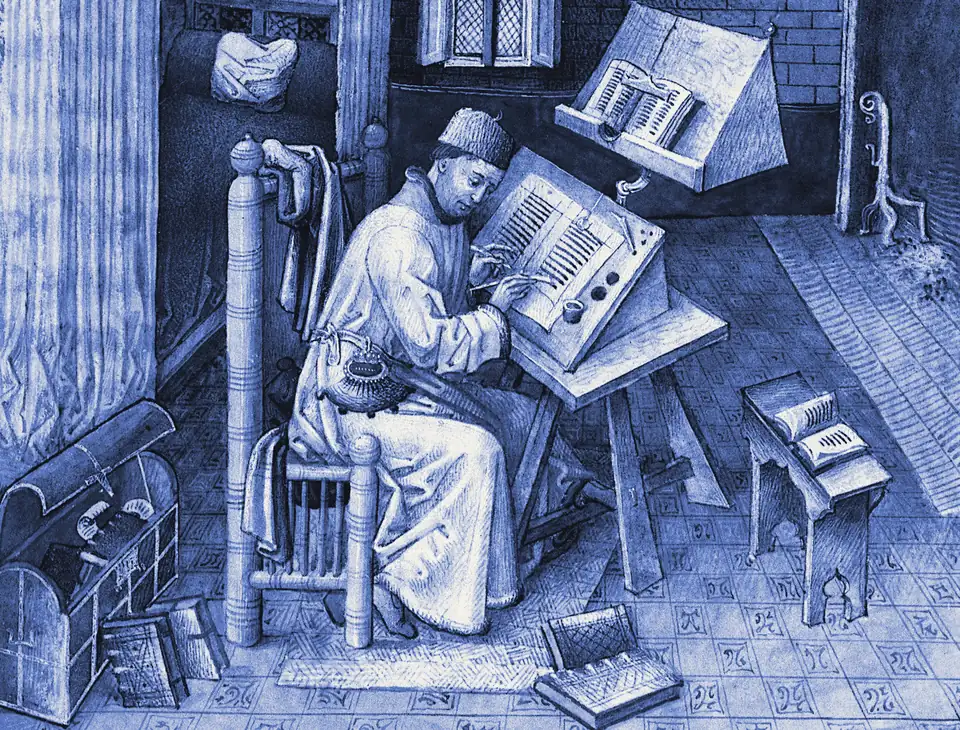
AI makes it possible to produce better text in less time and shifts some effort from drafting toward ideas and editing. In hiring, this changes what a well-written letter can reveal about an applicant.
- An MIT study involving 444 college-educated professionals found that ChatGPT reduced the time spent on writing tasks and improved text quality, helping lower-ability workers most.Experimental Evidence on the Productivity Effects of Generative Artificial Intelligence · Shakked Noy, Whitney Zhang, MIT working paper, 2023
- An NBER study involving nearly half a million jobseekers found that those given algorithmic help with resume writing were hired 8% more often, with no sign of lower employer satisfaction.Algorithmic Writing Assistance on Jobseekers' Resumes Increases Hires · Emma Wiles, Zanele T. Munyikwa, John J. Horton, NBER Working Paper 30886, 2023
- A study released as a preprint found that, after an AI tool was introduced, the link between a tailored letter and a job offer fell by 79%, while the initial advantage in getting callbacks disappeared in about two months.Signaling in the Age of AI: Evidence from Cover Letters · J. Cui, G. Dias, J. Ye, arXiv, 2025
What I think: I would keep taking care with writing, but as AI makes polishing text easier, I would also demonstrate my ability through the work itself, not just its presentation.
10
How do you prepare for AI at work?
Preparing for AI at work means learning both to use the tool and to check its results, because gains on one task do not guarantee correct answers on another.
In Microsoft and LinkedIn’s survey of 31,000 people in 31 countries, 66% of leaders said they would not hire someone without AI skills, yet only 39% of AI users had received training from their company. Demand for these skills already exists alongside a training gap.
- A working paper surveying 100,000 Danish workers found that half had used ChatGPT, but employer restrictions and required training were frequent obstacles.The Adoption of ChatGPT · Anders Humlum, Emilie Vestergaard, Becker Friedman Institute Working Paper, 2024
- A survey of 319 knowledge workers found an association between greater confidence in AI and less critical thinking, with critical thinking shifting toward checking information and integrating answers.The Impact of Generative AI on Critical Thinking: Self-Reported Reductions in Cognitive Effort and Confidence Effects From a Survey of Knowledge Workers · Hao-Ping (Hank) Lee et al., CHI 2025, ACM, 2025
- A study involving 758 BCG consultants found a 30% performance improvement on tasks within AI’s capabilities, but a 19-percentage-point drop in correctness on a task beyond them, even though the tasks looked similar.Navigating the Jagged Technological Frontier: Field Experimental Evidence of the Effects of Artificial Intelligence on Knowledge Worker Productivity and Quality · Fabrizio Dell’Acqua, Edward McFowland III, Ethan Mollick et al., Organization Science 37(2), 403–423, 2026
What I think: I would start with a limited task, measure correct results and errors, and keep human review in place before expanding AI use at work.
Who writes this
I’m Vitor Araujo, an engineer. I build AI products for companies, and I speak and write about AI ethics and the philosophy of technology. More about me.
Other guides